

Resources / How to Budget
How to Budget: A Simple Guide and Monthly Budget Template
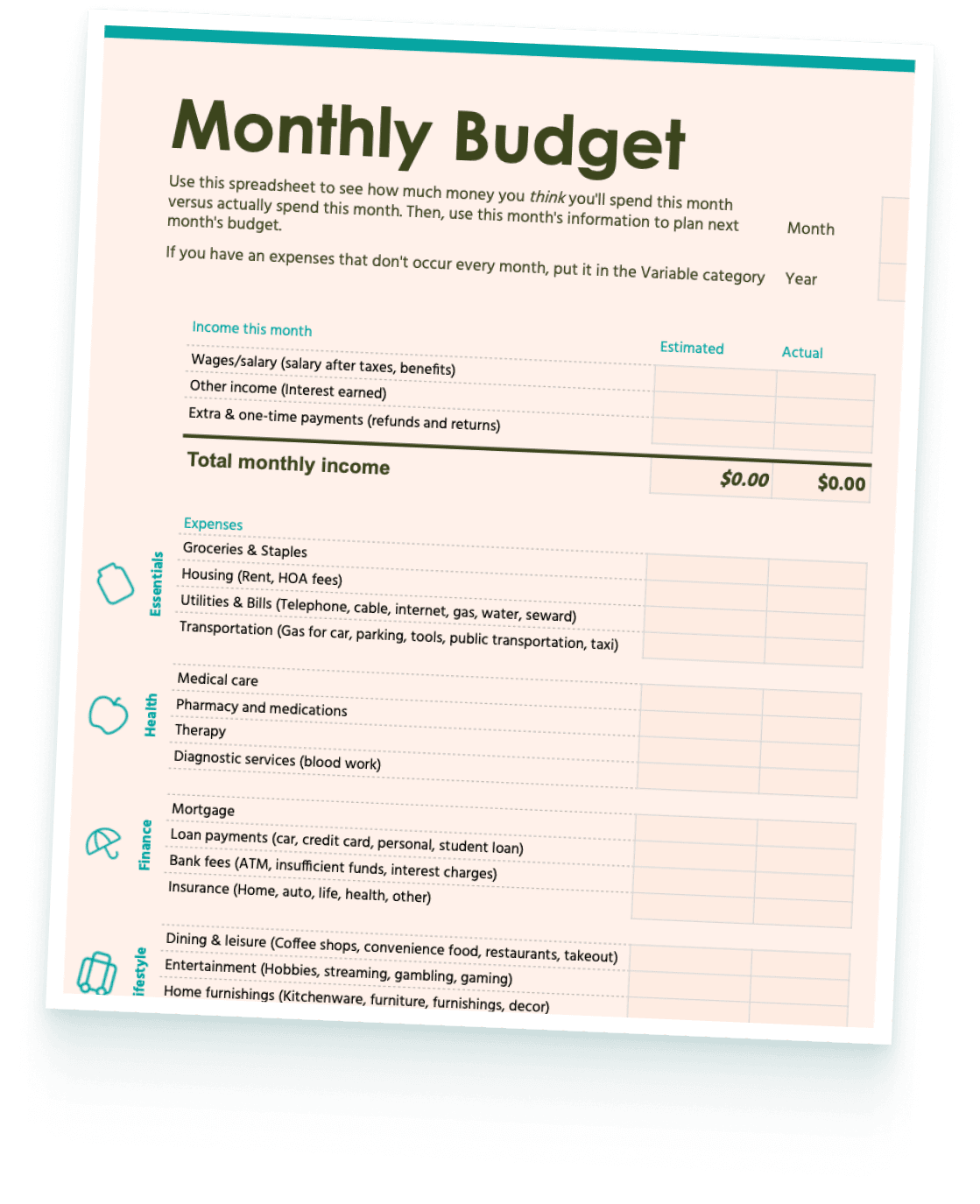
Get a better sense of what you spend every month. Download our free budget template for organizing budget categories.
Money rarely moves in a perfectly straight line. A paycheck comes in, bills go out, groceries cost a little more than expected, and an automatic payment you forgot about appears. If keeping track feels difficult, that does not mean you are bad with money. It means there are a lot of moving parts.
A budget can help you see those parts more clearly. It is not a punishment or a list of things you are no longer allowed to enjoy. It is simply a plan for what you are working with: what is coming in, what is going out, and what you want your money to make possible.
This guide explains how to budget, how to organize budget categories, and how to build a monthly expenses list that reflects your real life.
How to budget in five steps
You do not need a complicated spreadsheet or a perfect month to get started. A notebook, a worksheet, or a simple digital tool can all work. Really, the best approach is the one you can return to regularly.
Estimate your income and expenses
You may already have a general sense of what comes in and where your money goes. Comparing that estimate with your actual numbers later can bring a helpful “aha” moment.
It doesn’t need to be perfect. Set aside three to five minutes and write down how much income you expect this month, followed by your estimated expenses. Use the nearest paper and pencil, or print our handy monthly budget template below. This is simply a starting point for seeing what you’re working with.

Make a monthly expenses list
Review bank and credit card transactions, receipts, cash purchases, and automatic payments. Doing this for three months can help you spot expenses that do not happen every month.
Your first list does not have to be exact. The goal is to build a clearer picture, one expense at a time.

Sort your spending into budget categories
Budget categories group similar expenses together, making a long list easier to understand. For example, rent and electricity might sit under “Essentials,” while streaming services and hobbies might sit under “Lifestyle.”
There is no single correct set of categories but we start you off with a few that help put purchases into perspective. More about budget categories below.

Note your fixed versus variable expenses
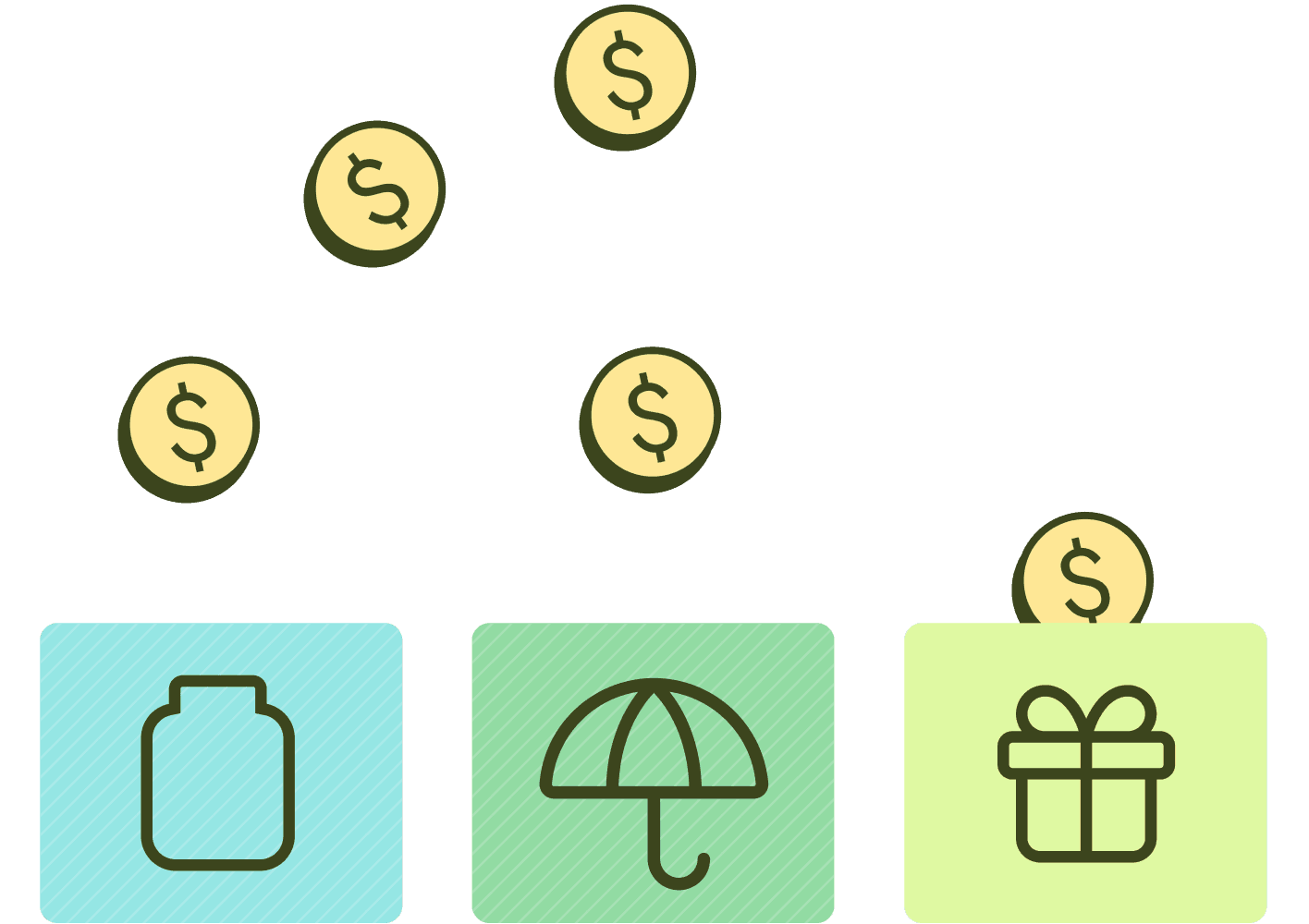
Fixed expenses are generally predictable. Variable expenses can feel unpredictable because they may change in amount or timing. Separating the two can show you which costs are easier to plan for and where you may want a little extra breathing room.
In our budget template, you would add variable costs under the “Variable” line item.


Review and adjust
At the end of the month, compare what you expected with what actually happened. A budget is allowed to change. If groceries cost more or an unexpected bill came up, update the plan with that new information—no guilt required.
What are budget categories?
Budget categories are groups used to organize income and expenses. They turn individual purchases and payments into a useful overview of where your money is going.
At Enrich Network, we use six broad categories.
- Essentials
- Health
- Finance
- Kindness
- Lifestyle
- Seedling


Essentials
These are expenses that support day-to-day life and help your household keep running comfortably such as rent or mortgage payments, utilities, groceries, transportation, child care, phone and internet service, and insurance.

Health
Health costs can vary widely and may come with different savings opportunities or support programs, so it can be useful to track them separately. Examples include insurance premiums, prescriptions, copays, dental and vision care, therapy, medical supplies, and wellness expenses.

Finance
This category covers money used to meet financial commitments or prepare for what comes next and future readiness. It includes bank fees, interest charges, debt payments, account fees, taxes, and professional services (like accountants).
Kindness
Generosity is part of real life, and it deserves a place in a budget. This category can include gifts, donations, helping a friend or family member, community contributions, and small acts of care for yourself.
Lifestyle
Life is more than bills. This category includes things that bring enjoyment, connection, rest, or creativity, such as dining out, entertainment, subscriptions, hobbies, personal travel, and events.

Seedling
Planting for a hopeful, more secure future. This category includes spending that supports learning, skills, and longer-term goals, such as tuition, classes, books, professional tools, certifications, and side projects, and rainy day or emergency funds that can help cover some costs when life happens.
These categories are a starting point, not a set of rules. If pet care, family support, or another type of spending deserves its own category in your life, add it. A useful budget should fit you.
What is a fixed expense?
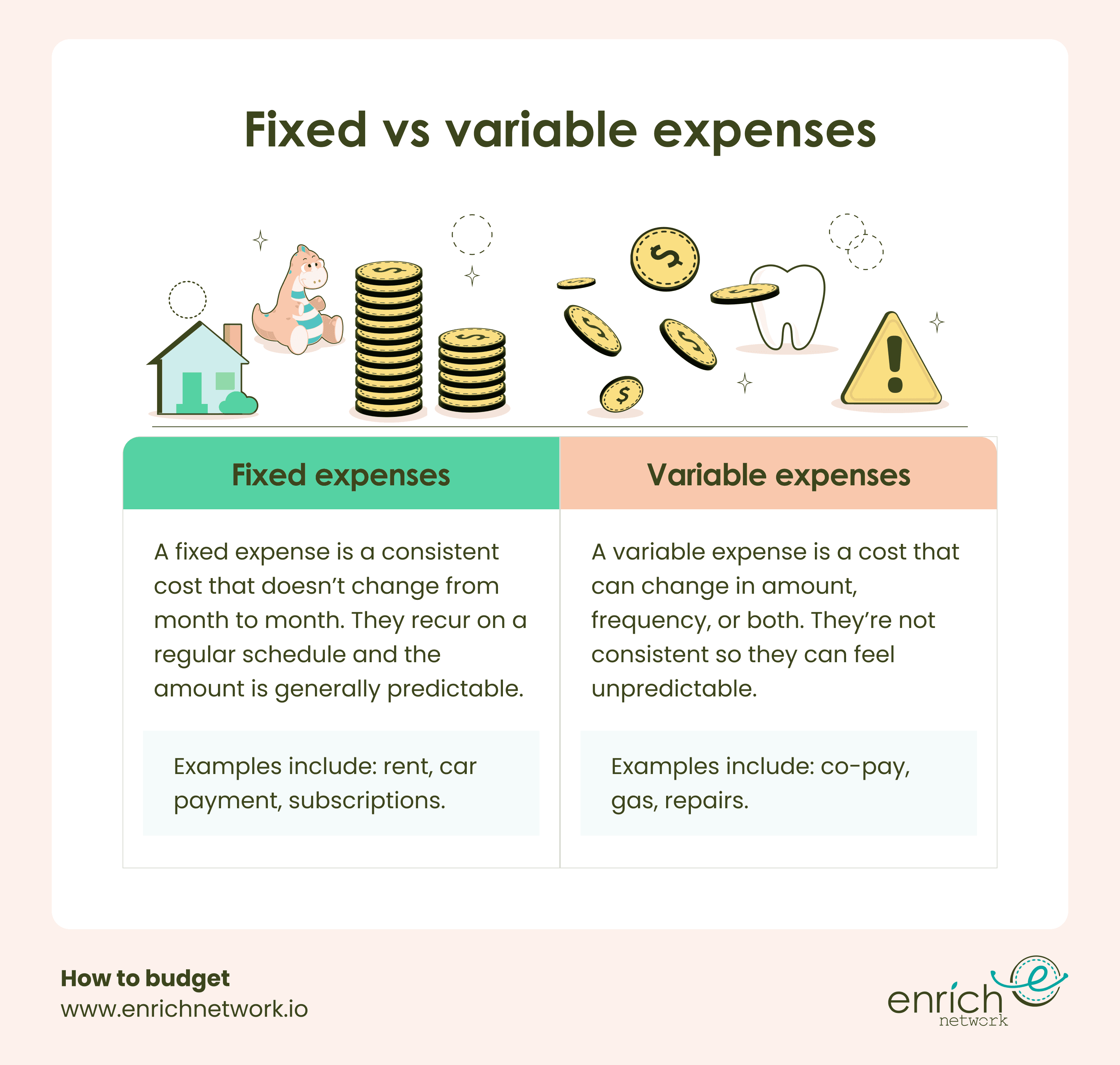
A fixed expense is a cost that is usually due on a regular schedule and stays the same or changes very little. Because the amount and timing are predictable, fixed expenses are often easier to include in a monthly plan.
Common fixed expenses include:
- Rent or mortgage payments
- Car payments
- Insurance premiums
- Internet service
- Child care with a set fee
- Memberships and subscriptions
- Minimum loan payments
An expense does not have to stay exactly the same forever to be considered fixed. Rent may increase when a lease renews, for example, but it is still predictable during the lease period. Fixed expenses are easier to plan for in advance.
What is a variable expense?
A variable expense is a cost that can change in amount, frequency, or both. Some variable expenses happen every month, while others appear only occasionally.
Common variable expenses include:
- Utility bills that change with usage
- Unexpected medical co-pays
- Copays and prescriptions
- Home or car repairs
- Gifts
- School expenses
Variable does not mean unnecessary. Many essential costs change from month to month. Tracking them simply helps you plan with a more realistic range instead of expecting the same number every time. Variable expenses are trickier to plan for but with a budget, you can set money aside for them.
Fixed vs. variable expenses at a glance
A monthly expenses list to get you started
Use this monthly expenses list as a prompt while reviewing your spending. Skip anything that does not apply and add anything that is missing.
Essentials
- Groceries & Staples
- Household Supplies
- HOA Fees
- Home Services & Improvement
- Rent
- Transportation Rentals
- Gas (vehicle fuel)
- Parking & Tolls
- Public Transit
- Taxis & Ride Shares
- Vehicle Maintenance & Repair
- Electricity, Gas, Water & Sewage
- Utilities: Telephone, Cable & Internet
- Utilities & Bills
Health
- Diagnostic Services
- Hospice
- Hospitalization
- Medical Care
- Nursing Care
- Therapy
- Pharmacy & Medications
- Childcare & Supplies
- Dependent Care & Supplies
- Personal Hygiene
- Pet Care, Supplies & Services
- Supplements
- Veterinary Services
Finance
- ATM Fees
- Foreign Transaction Fees
- Insufficient Funds
- Interest Charges
- Other Bank Fees
- Overdraft Fees
- Home & Auto Insurance
- Life & Health Insurance
- Other Insurance
- Car Loan Payment
- Credit Card Payment
- Personal Loan Payment
- Student Loan Payment
- Mortgage Payment
- Consulting Services
- Financial Services
- Legal Services
- Income Tax
- Non-tax government payments
- Other Taxes Paid
- Property Tax
Kindness
- Personal/
Family Gifts - Charitable Donations
- Generosity & Support
- In-Kind Donations
Lifestyle
- Alcohol & Bars
- Coffee/
Specialty Drink Shops - Convenience Food
- Restaurants & Takeout
- Vending Machines
- Eating out, snacks & drinks
- Casinos & Gambling
- Event Tickets & Admissions
- Gaming
- Hobbies & Classes
- Subscriptions & Streaming
- Decor
- Furniture & Furnishings
- Kitchenware
- Accessories & Jewelry
- Bookstores & Newsstands
- Clothing & Shoes
- Department/
Discount/ Superstores - Electronics
- Office Supplies
- Personal Wellness & Grooming
- Small Personal Goods
- Tobacco & Vape
- Flights/
Lodging/ Rental Cars - Vacation & Travel
Seedling
- Emergency Fund Savings
- Retirement Contribution
- Education Savings
- Savings Deposit/
Transfer - Securities & Crypto
Get the free budget spreadsheet
Enrich Network’s money tool connects to your bank accounts securely and automatically categorizes your spend. It’s the easiest way to get a sense of your monthly budget. But if you’re not ready to connect your accounts, that’s ok. We created a Google Sheets budget template for a simple place to record income, monthly expenses, and budget categories.
Add month and year. Track your estimated income and expenses, then update the actual spend across a month. The spreadsheet will automatically tally up the totals for both.
Open budget spreadsheet in Google SheetsOnce opened simply click File > Make a copy so you can have your very own.
Get budget insights automatically
If you would rather spend less time entering expenses by hand, Enrich Network’s money tool can help you:
- Connect eligible financial accounts to see spending in one place
- Digitize paper receipts
- Organize purchases into budget categories
- Build a clearer view of your monthly expenses
- Find benefits, community programs, discounts, and other resources that may be available
- Earn Enrich Points for eligible actions in the money tool
Looking for ways to lower a bill or make your budget stretch further? Explore the Assistance Finder to see what may be available near you. Eligibility varies by program.
There is no perfect budget to unlock. A little more clarity counts—and seeing where your money goes can make the next decision easier.
Frequently asked questions
What is an emergency fund?
An emergency fund (sometimes called a rainy day fund) is money set aside for unexpected expenses or a temporary loss of income.
For example, new tires may not be part of your regular monthly expenses, but when you need them, waiting may not be an option. Without money set aside, you might have to go without reliable transportation or use a credit card, which can make the purchase cost more because of interest.
An emergency fund can provide a little breathing room when something unexpected happens. Some people work toward saving enough to cover several months of essential expenses in case a household income changes. But that can be a big goal, and it is not where you have to begin. Setting aside enough for one possible expense (like a tire replacement, medical copay, or home repair) is a meaningful start.
This emergency fund calculator can help you estimate six months of expenses. If that number feels far away, start with an amount that works for what you have right now. Every amount you set aside counts.
How many budget categories should I use?
Use enough categories to make your spending understandable without making tracking feel like extra work. Six broad categories may be plenty. If you want more detail, add subcategories for areas such as groceries, transportation, or health care.
Is savings a monthly expense?
Savings can be included in your monthly plan as a Seedling category. Treating it as a planned amount can help you set money aside when that is realistic, even if the amount changes from month to month.
Are utilities fixed or variable expenses?
It depends on the bill. Internet service may be fixed, while electricity, gas, and water often vary based on usage, rates, and the season.
What if my income changes every month?
Start with a conservative estimate based on recent income, then update it as money comes in. It may also help to identify your essential expenses first and make flexible plans for the rest.
How often should I review my budget?
A quick weekly check can keep your monthly expenses list current. A monthly review can then help you update categories, prepare for upcoming costs, and decide what you want to carry forward.