
Households need more than access to programs. We're building a guidance layer that helps people see their benefits, understand next steps, and move closer to financial stability.
A working mom qualifies for three different assistance programs. She has the paperwork. She has the need.
What she doesn't have is a system that works with her.
So she re-enters the same income information across multiple portals. Waits on hold with different agencies. Tracks deadlines that don't line up. Tries to understand how a small change in her work hours might affect everything else.
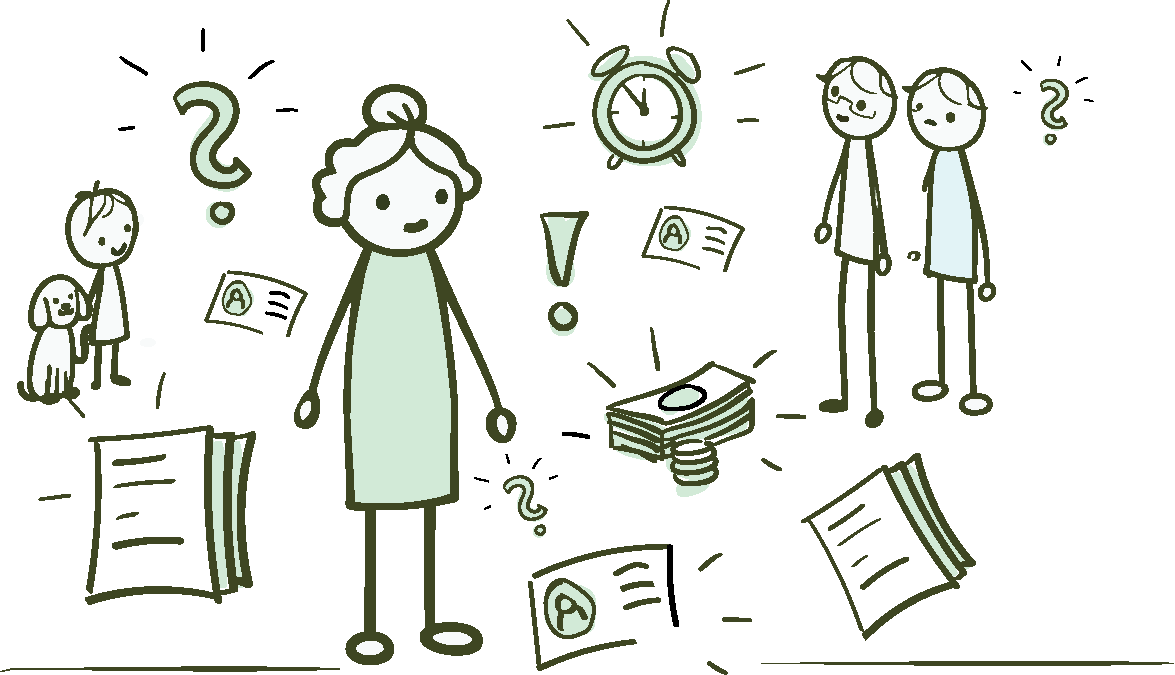
She's doing everything right—and still doing it alone.
And even after all that work, she still doesn't have one place to see what support she's getting, how it fits together, or whether it's actually helping her close the gap between what comes in and what goes out.
We still point to this and call it access.
But what our policies have actually built is a set of programs that work independently, and households are left to stitch them together.
The gap between "a program exists" and "a household can use it"
When we first started building Enrich Network, we thought the most direct path was to help governments and large programs run benefits on better rails. Faster disbursements, modern infrastructure, fewer failure points. We've built that system—and Seeds of Hope is one of the ways we're proving it in the real world.
That work still matters. But it's not where most households get stuck.
The deeper problem is everything that sits between "a program exists" and "a household can actually use it."
Today, each program is designed mostly in isolation. Each has its own forms, rules, portals, and timelines. We've optimized them one by one, but we haven't designed for how they add up in a real household's life. In practice, we've handed the work of coordination to households—the people with the least time, energy, and margin to spare. That design choice shows up as confusion, repeated paperwork, missed deadlines, and benefits lost not because someone stopped needing them, but because they couldn't keep up with the process.
For many of the households we talk to, the problem isn't just that life is expensive. It's that they're tired. Worn down by unstable work, rising costs, and the constant effort of staying one step ahead of the next crisis. When someone is already holding that much, every extra step in a process isn't just an inconvenience. It's more weight.
Even well-intentioned systems can add to that weight. A new portal here, an extra upload there, another account to create or password to remember. Each piece might look small on its own. Together, they can make support feel like one more thing to manage.
Enrich Network isn't immune to this. We've already seen moments where our own experience hasn't met people where they are—like when someone uses benefits to stock up, ends up with long, complex receipts, and our current flow doesn't make that easy to manage. Those are signals we pay attention to, because our goal isn't to shift effort from one screen to another. It's to reduce the burden households carry just to stay connected to the support they need.
What Seeds of Hope showed us
Seeds of Hope is one of the ways we've been able to see this up close. It's a pilot that offers monthly grocery support for households using EBT, run on the same rails we originally set out to build. People want more than a transfer showing up. They want to understand what else they might qualify for, what to do next, and what might happen if their hours or income change. The money matters. But so does having someone—and somewhere—that can help them make sense of it all.
The success of Seeds of Hope made the information need impossible to ignore. That need for information is the gap we're focused on now: not just whether support exists, but whether a household has one place to see it, understand it, and act on it without starting from scratch each time.
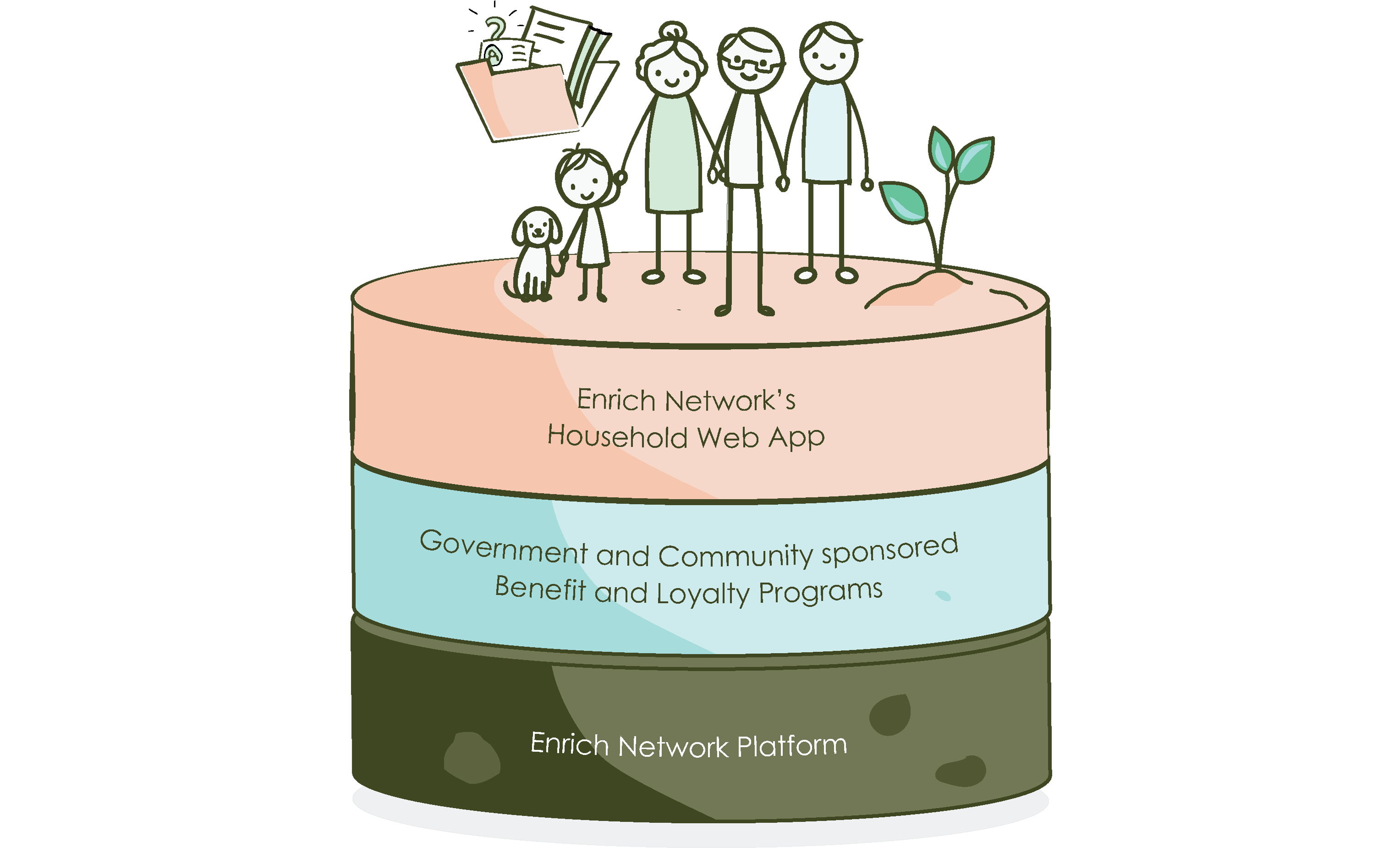
In plain terms, we're building a guidance system that sits with the household, not just inside each program. A place where someone can see what support they're connected to, what to do next, and how changes in their life might ripple across the mix of programs they rely on.
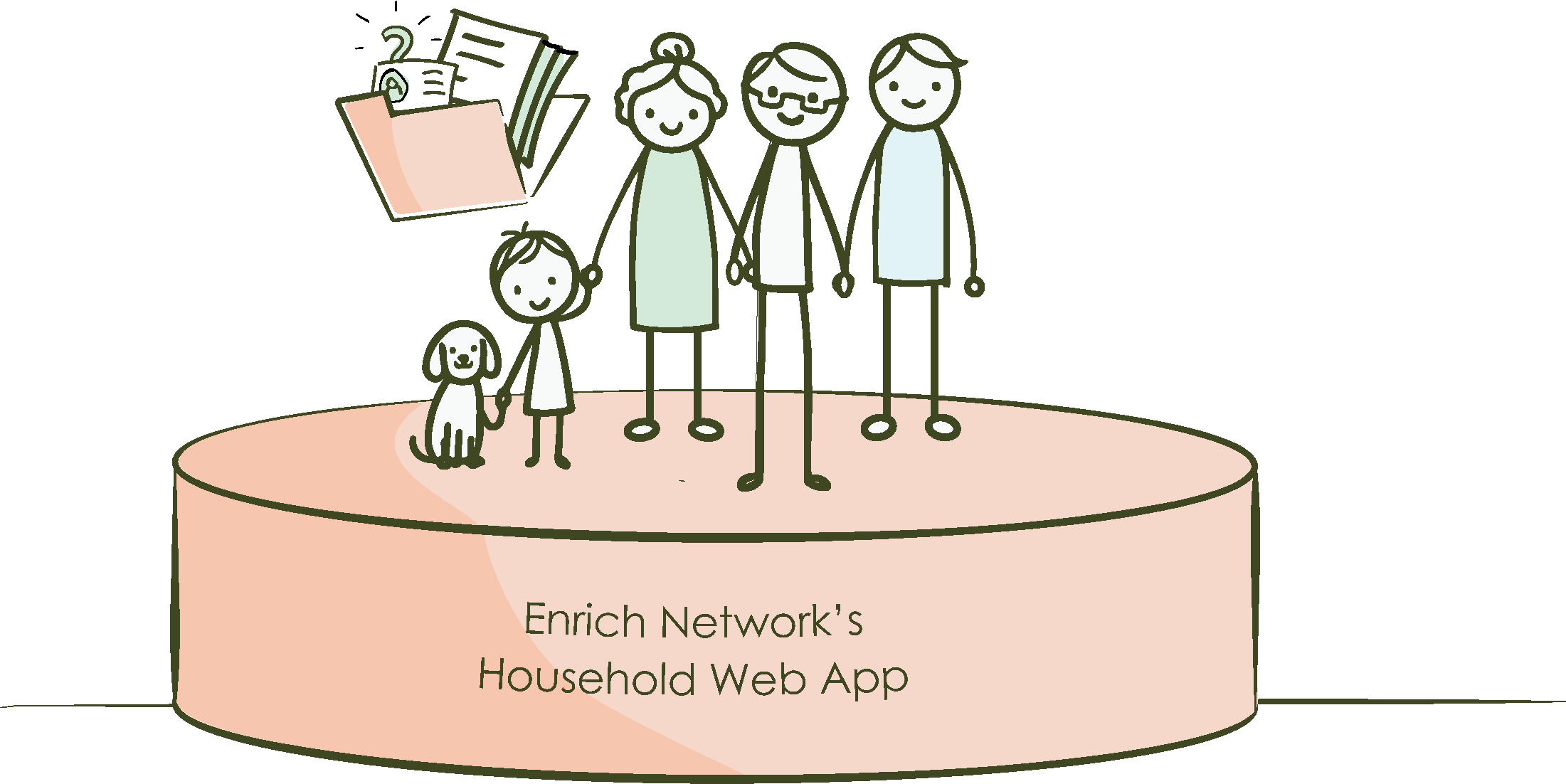
That's what we mean when we say Enrich Network is becoming a household-guidance layer.
In practice, that looks like:
- One view where a household can see their full financial picture and set a simple, honest goal: get as close as possible to a point where what comes in can reliably cover what has to go out.
- Clear, plain-language status and next steps—what benefits, community aid, and key financial resources are available to them, what has been applied for, what's pending, what's active, what's at risk, and which deadlines actually matter.
- A reusable household profile, so they aren't re-entering the same identity, income, and household details for every single application.
- A real map of progress on a day-to-day basis, so they can see whether all this effort is actually moving them closer to stability instead of just keeping them busy.
It's not about replacing existing programs or infrastructure. It's about giving households continuity and guidance in a landscape that was never designed with continuity in mind.
Strengthening the work, not competing with it
Governments, community organizations, family foundations, charitable trusts, and other sponsors of benefits and loyalty programs are already doing critical work. Many are pushing to reach people who are falling through the cracks, modernize outdated systems, and make limited dollars go further. Enrich Network is being built to strengthen that work, not compete with it. Our role is to be the household-facing guidance and data layer that reduces friction for the people you serve, while making it easier to see what's working and where households are getting stuck.
For government and program sponsors, that means clearer visibility into how households are engaging across programs, where administrative burden is causing drop-off, and which combinations of support are contributing most to stability—while also pairing with modern application and disbursement rails, so you're not asked to build and maintain yet another resident-facing platform on your own.
For community partners on the ground, it means that when you help a household with an application or a crisis, that effort doesn't live only in one system or one moment. It connects into a shared guidance layer that can travel with the household, even as programs, jobs, or circumstances change.
Households deserve more than a list of programs
As a society, we've quietly designed a system that asks the most from the people with the least margin—and we still point to it and call it access. Enrich Network is our way of saying that isn't good enough. Households deserve more than a list of programs and a stack of portals. They deserve guidance they can trust, a clearer sense of where they stand, and tools that reduce the weight they carry instead of adding to it. Enrich Network is still early, and we're still learning. But we're committed to building this in a way that is honest about what we know, transparent about what we're inferring, and grounded in the lived reality of the households and partners we serve.
If you're running a government or community-sponsored benefit or loyalty program—whether through a public agency, a nonprofit, a family foundation, or a charitable trust—and you're thinking about how to make support more navigable for the people you serve, we'd value the conversation.
This household-guidance layer only works if it's shaped alongside the people and organizations closest to the work.
Enrich Network is building this because it needs to exist.